Before You Plan: How Pembrokeshire Works
Two things run the show in Pembrokeshire: the tide and the weather. Almost every outdoor activity here is tidal in some way. Some coasteering routes only work at high water, kayak crossings need the right tidal window, and surf beaches get better or worse as the tide moves. Before you book anything, it's worth knowing that a good Pembrokeshire provider will look at the tide table first and plan the day around it. That's how it should be, and it's a big part of why the coast here is so good to explore.
The other thing to know is that Pembrokeshire splits pretty neatly into north and south, and they feel like different counties. South Pembrokeshire (Tenby, Manorbier, Lydstep, Stackpole, Freshwater East) is warmer, more sheltered, easier to get around and the best bet for a first visit. North Pembrokeshire (St David's, Solva, Whitesands, the Preseli Hills) is wilder and more exposed, and worth the drive if you're staying more than three days. The itineraries below follow that split.
May, June and September are the best months: fewer people, a decent chance of good weather, and conditions that suit every activity. July and August are busy but the water is warmest. April and October are good if you've done a bit before and don't mind colder water. Winter is for surfers and climbers. The swell is at its best and you'll have the coast pretty much to yourself.
The Weekend Break (2 Days)
Two days is enough to get a proper taste of Pembrokeshire, as long as you don't spend half of it in the car. Base yourself in or near Tenby and most of south Pembrokeshire's activities are close by.
Day 1: Coasteering
Start with coasteering. It gets you right into the Pembrokeshire coast rather than looking at it from the path, and it's a good way to start. A morning session with Tenby Adventure, timed around the tide, takes you to places most visitors never see: sea caves in the limestone headland, channels you can only get into when the tide fills them, a proper dunk in cold Atlantic water and probably a jump you didn't think you'd do. Leave the afternoon for recovering, a wander round the walled town and a decent meal. Tenby's restaurants have got a lot better in recent years, and there are good options for most budgets inside the walls.
 Day one: a morning in the sea caves near Tenby.
Day 2: Sea Kayaking
Wake up and check the weather. If it's calm, sea kayaking from Tenby Harbour is a good follow-up. You see the same stretch of coast you swam and scrambled along the day before, but from a kayak, which is a very different view. Paddling north from the harbour, the view back to the Georgian townhouses and the castle is one of the best in Wales. If it's windier, the Daugleddau estuary is a sheltered alternative: calm water, lots of birdlife and a completely different feel to the open coast.
If the timing works, finish the second day at Barafundle Bay. It regularly makes lists of Britain's best beaches, and you can only get there on foot, via a short walk from the car park at Stackpole Quay. It's 15 minutes from Tenby and plenty of visitors to the town have never heard of it.
BOOK YOUR WEEKEND ACTIVITIES
Coasteering and kayaking with Tenby Adventure. Both can be booked online and are timed to the tides.
See All Providers →The Short Break (3 Days)
Three days lets you add a third activity and takes some of the rush out of the plan. The obvious addition to coasteering and kayaking is either surfing or rock climbing, depending on whether you'd rather go up or along.
Day 1: Coasteering at Lydstep
For a three-day trip, go straight to Lydstep rather than the Tenby town route. It's the best coasteering in south Pembrokeshire and we'd put it up against anywhere in the UK. The limestone here gives you something quite different: deep caves, swim-throughs that open out into chambers, and jumps of all sizes at every stage of the tide. Book with Tenby Adventure and tell them you want Lydstep, and they'll plan the session around the best tidal window of the day.
Day 2: Surfing at Freshwater West or Manorbier
Day two works well as a surf day. It's less full-on than coasteering and gives your arms a rest. Freshwater West is 40 minutes from Tenby and one of the most powerful beach breaks in Wales, with big dunes behind it, facing straight into the Atlantic, and with regular swell that works for beginners when conditions are right. If the swell is too big, Manorbier Bay is 20 minutes away and a lot more sheltered. Book a lesson with Blue Horizons. They know these beaches better than anyone and will put you on the right one for your level.
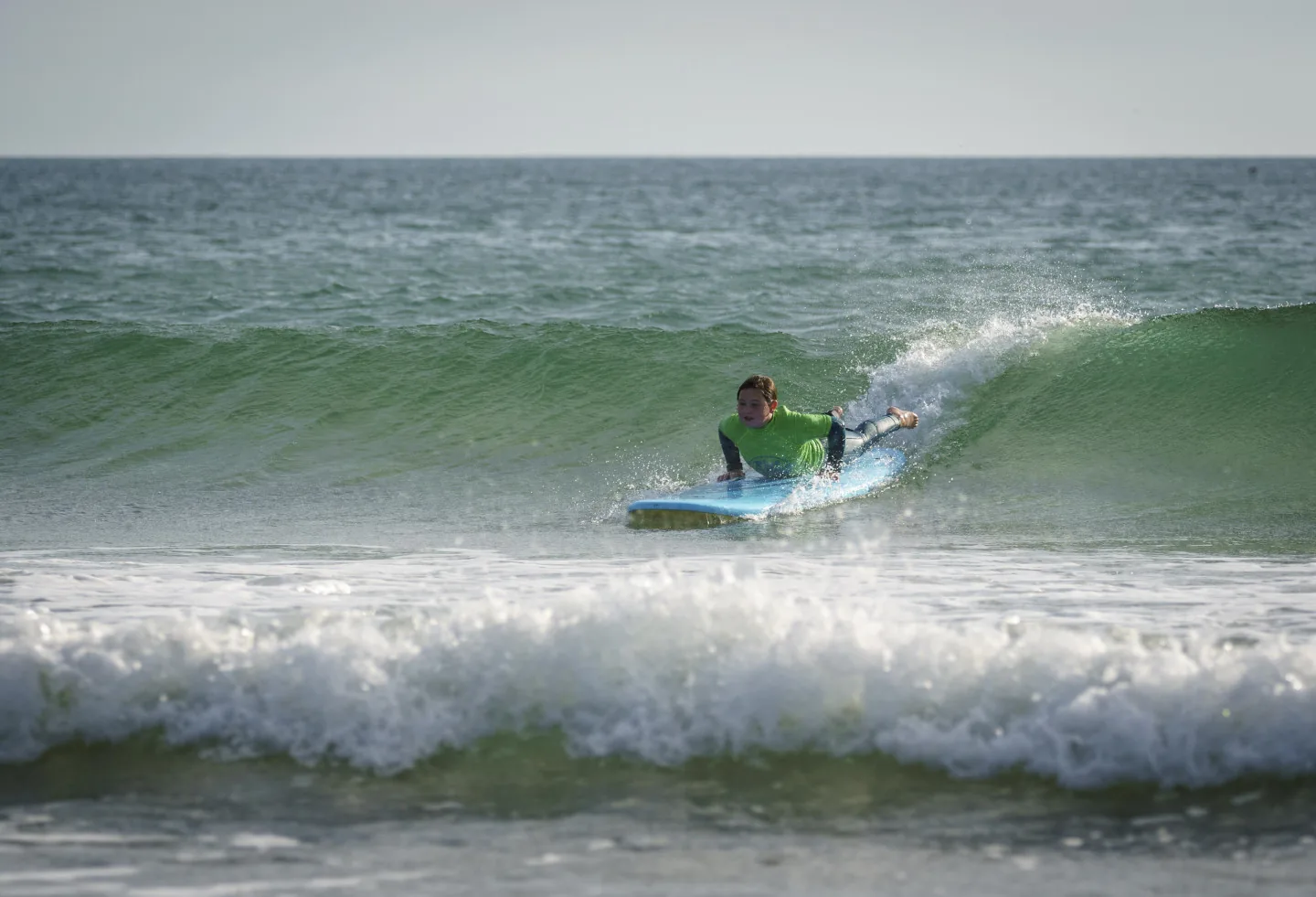 Blue Horizons at Freshwater West. Better than a wave pool, and the dunes are free.
Day 3: Rock Climbing at Giltar Point
Finish with something quieter and more technical. Rock climbing at Giltar Point, just outside Tenby, is a compact crag with beginner and intermediate routes on solid limestone, and you can be on the rock within 10 minutes of leaving the town. The views out over the bay from the belays are great, and climbing with the sea right there below you feels nothing like an indoor wall. Tenby Adventure runs introductory climbing sessions here for people who have never been on a sea cliff before.
The Full Week (5 Days)
Five days is about right for Pembrokeshire. It's long enough to see both coasts, do several activities and not feel rushed. Do two days south, one day driving north, then two days north, and you'll have covered the best of both.
Days 1–2: South Pembrokeshire
Run the two-day itinerary above (coasteering + kayaking), but add Stackpole and Barafundle as an afternoon destination. If you get a really good day (clear skies, light winds), head to Barafundle Bay in the morning and you'll have one of Britain's best-known beaches almost to yourself. The walk from Stackpole Quay through the National Trust estate to the bay takes about 20 minutes.
Day 3: The Drive North to St David's & Whitesands
The drive from Tenby to St David's takes about an hour and goes through some really underrated countryside. Stop at Pembroke Castle if you haven't seen it. It's one of the best-preserved medieval castles in Britain and much bigger than you expect up close. Get to St David's by mid-morning, walk round the Cathedral Close, then carry on to Whitesands Bay for the afternoon. Whitesands is the best surf beach in north Pembrokeshire: a wide, sandy bay facing straight into the Atlantic, with reliable swell and a relaxed feel. If conditions are good, it's a good afternoon for a surf lesson or some bodyboard hire. Stay overnight in or near St David's. It deserves at least one night.
Day 4: Abereiddy & Coasteering with Be Adventurous
Abereiddy Blue Lagoon is the photo that put coasteering on the map internationally. The flooded Victorian slate quarry, green-blue water and 20-metre walls are easy to recognise. A guided coasteering session here with Be Adventurous feels quite different from the Tenby routes: bigger to look at, more about the jumps, and at a venue that has hosted Red Bull Cliff Diving World Series events. After the tighter caves around Tenby it makes a good last coasteering session, and you'll have seen two very different sides of the same sport.
 Abereiddy Blue Lagoon, probably the most photographed coasteering spot there is, and day four of the five-day trip.
Day 5: Paddleboarding & the Coast Path
Save the fifth day for something gentler. A stand-up paddleboarding session in the morning (in one of the sheltered south Pembrokeshire bays or on the Daugleddau estuary), then an afternoon walking a section of the Pembrokeshire Coast Path. The stretch between Stackpole Head and Barafundle Bay and the section north from Solva are both excellent. The Coast Path is a 186-mile long-distance trail that follows every bay and headland of the national park. You can walk the best bits without taking on the full route, and looking down from the clifftops at places you were swimming in earlier in the week is a pretty good way to finish.
"Pembrokeshire doesn't feel like anywhere else in Britain. You notice it as soon as you arrive, and you miss it as soon as you leave."
Practical Planning Notes
Book activities before you book accommodation, not after. The good providers in Pembrokeshire book up weeks ahead in summer, and the activity times decide which days you need to be where. Once you know your coasteering day and your surf day, working out where to stay is much easier.
You'll need a car for the five-day itinerary, and we'd strongly recommend one for the three-day. Tenby is on the train line (direct from Cardiff and Swansea), and the Puffin Shuttle coastal bus stops at many of the activity beaches in summer, but being able to move between south and north Pembrokeshire when you want is what makes a multi-day trip work. For the two-day Tenby-based break you can get by without one: Tenby Adventure's activities depart from the town itself, and Barafundle is a short taxi ride.
Tenby for south Pembrokeshire: lots of accommodation, good restaurants, and small enough to walk everywhere. St David's for north Pembrokeshire: smaller and quieter, with far fewer options, so book early. Freshwater East or Manorbier if you want something in between, close to the surf beaches and within easy reach of the coasteering spots. Self-catering cottages through Wales Cottage Holidays or Sykes Cottages give you a kitchen, which helps on long activity days with an early start.