


Cliff jumps, sea caves and ocean swells on the coastline where coasteering was born. Compare Pembrokeshire’s trusted providers side by side and book direct.
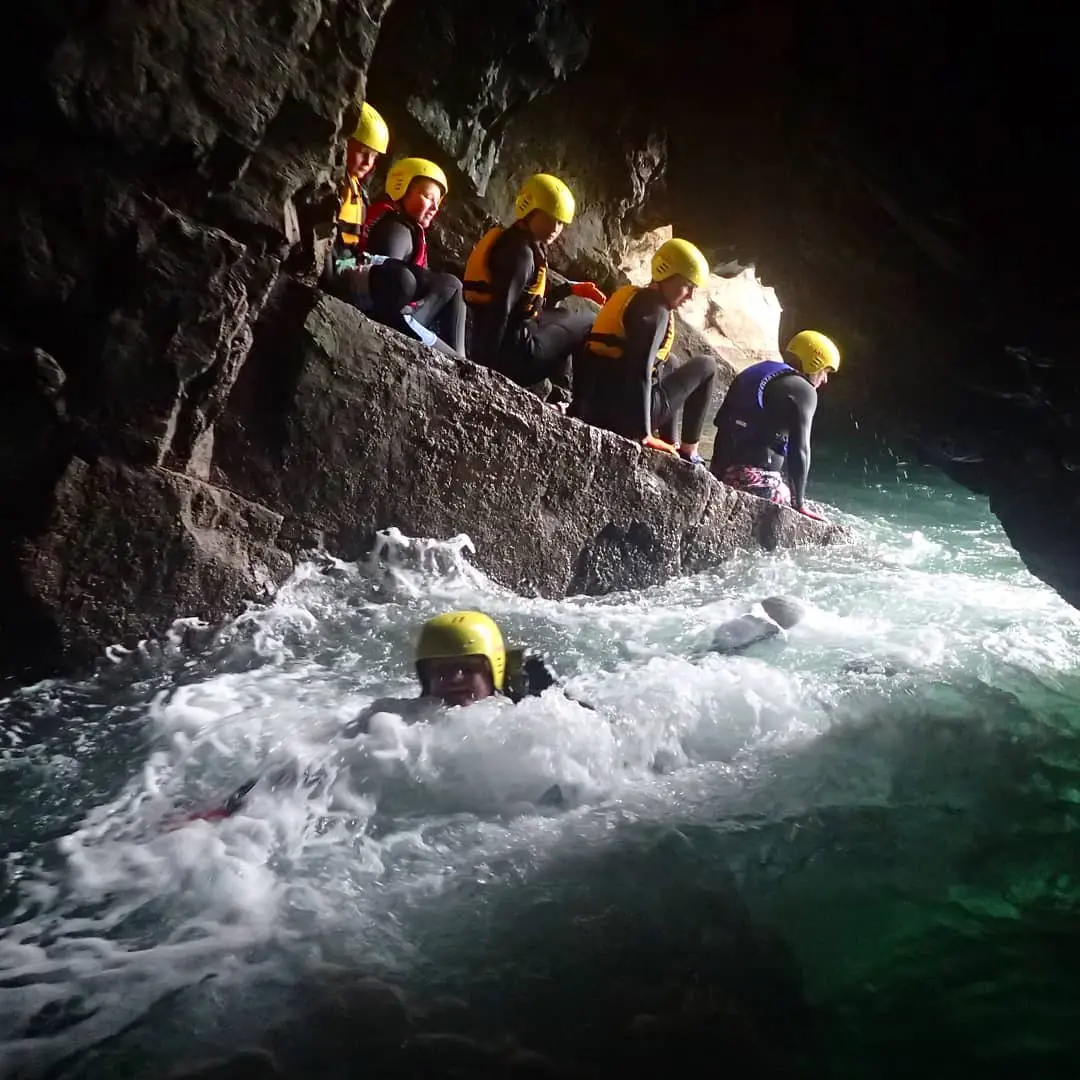
Coasteering is the original Pembrokeshire adventure activity. You work your way along the coast at sea level, scrambling over rocks, swimming through sea caves and gullies, riding the swell and jumping off the odd ledge or cliff. You'll be kitted out in a wetsuit, buoyancy aid and helmet, and led by an experienced guide who knows every rock, cave and jumping spot on their stretch of coast.
Pembrokeshire is widely recognised as the birthplace of coasteering. The Pembrokeshire Coast National Park has over 180 miles of coastline, full of sea caves, arches, blowholes and sheltered coves, which is why a lot of people reckon it's the best place in the world to do it. The water is clean and the geology changes as you go, from the old volcanic rock around St David's to the limestone cliffs of the south coast. You'll quite often have seals, porpoises and seabirds for company.
No previous experience is needed. Sessions are fully guided and instructors adapt the route to the group's ability and confidence. Nervous jumpers can take smaller leaps or skip the big drops altogether, nobody minds. That said, you do need to be a reasonably confident swimmer and comfortable in open water. Children as young as eight can take part on most sessions, making coasteering one of the best family adventure activities in Wales.
Everything you need to know before your coasteering session.
Sessions typically last 2–3 hours, including safety briefing and getting kitted up.
Small groups of up to 12, with a qualified instructor guiding every session.
Moderate fitness needed. You'll be swimming, climbing and scrambling, but at your own pace.
Wetsuit, buoyancy aid and helmet all included. Bring a swimsuit, a towel, and trainers with a good sole.
April through to October. Peak season is June–September when the water's warmest.
Children aged 8 and over are welcome. Under-18s must be accompanied by an adult.
We list two coasteering providers on the Pembrokeshire coast. Click a pin to book.
We've checked out every provider on this page ourselves. Compare prices, locations and reviews, then book direct.
Yes, you need to be a reasonably confident swimmer and comfortable in open water. You'll be wearing a buoyancy aid throughout, but you will be swimming in the sea, sometimes in moving water. If you can swim 50 metres unaided, you'll be fine.
No. Jumping is always optional and your instructor will show you a way round any jump you'd rather skip. Lots of people start on small ledges (1–2 metres) and work their way up as they get more confident. How high you go is entirely up to you.
Wear a swimsuit or tight-fitting shorts underneath, and bring a towel and warm clothes for afterwards. You'll also need footwear: old trainers with a good sole that stay secure on your feet are ideal (not sandals or flip-flops). The specialist kit (wetsuit, buoyancy aid, helmet and neoprene gloves) is provided. Leave valuables in the car.
Most providers accept children from age 8 upwards, provided they're confident swimmers. Under-18s must have a participating adult in the group. Some providers offer dedicated family sessions with smaller jumps and a gentler route, so check with the provider when booking.
Coasteering runs in most conditions (you're getting wet anyway). High winds and large swells can sometimes mean a change of location to a more sheltered spot rather than a cancellation. Your provider will contact you in advance if conditions require any changes. Full refunds or rescheduling are offered if sessions are cancelled due to weather.
The season runs from April to October. June through September offers the warmest water (14–17°C) and generally the calmest conditions. The August school holidays are the busiest time, so book well ahead. May and September are quieter and the conditions are often really good.
Articles we've written to help you plan your session.
The county's best coasteering spots ranked by a local coasteering guide, including the Blue Lagoon and the south coast caves.
Read the guide →A two-day adventure weekend on the volcanic coast with John Byrom.
Read the guide →How a sport that started on the cliffs of St Davids Head spread around the world.
Read the guide →No spam, unsubscribe anytime.
We respect your privacy. View our privacy policy.